
Cyber Security vs Artificial Intelligence: The Technology That Cuts Both Ways
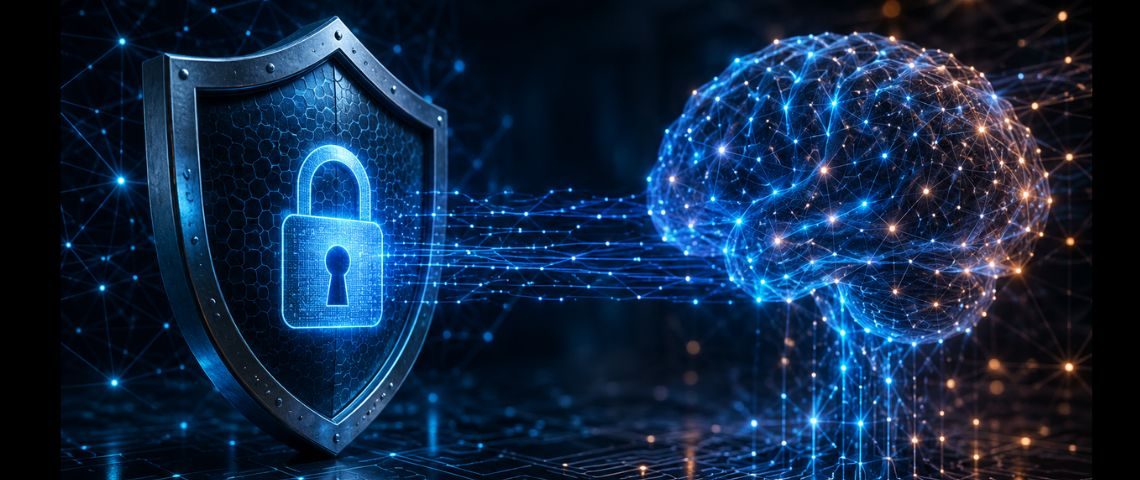
Imagine a tool so powerful that it can simultaneously build the best lock ever created — and craft the master key to open it.
That’s exactly where we are with artificial intelligence and cybersecurity right now.
The debate around cybersecurity vs artificial intelligence has never been more urgent. On one side, AI has become the most transformative force in digital defense — enabling faster threat detection, smarter responses, and round-the-clock monitoring that no human team can match alone. On the other hand, it has handed cybercriminals a weapon of terrifying precision: AI-powered phishing emails that are indistinguishable from real ones, malware that adapts in real time to evade detection, and deepfake attacks that can impersonate your CEO on a video call.
The numbers make it impossible to ignore. The AI in the cybersecurity market has already crossed USD 25 billion and is projected to reach USD 50.83 billion within the next five years, growing at a compound annual growth rate of 14.8%. At the same time, recent reports recorded more than 8,000 global data breaches in a single six-month period, with roughly 345 million records exposed.
So which is it — is artificial intelligence the future of cyber defense, or the biggest threat it has ever faced? The honest answer is both. And understanding how requires looking at exactly what’s happening on each side of the equation.
This article breaks down the cyber security vs artificial intelligence landscape in plain language — where AI helps, where it hurts, and what businesses in Bangladesh and beyond should be doing right now to stay ahead.
Understanding the Battlefield: What’s Actually at Stake
Before getting into how AI in cybersecurity functions — as defender or attacker — it’s worth grounding ourselves in the scale of what’s happening.
A recent Gartner forecast puts global end-user spending on information security at $240 billion — a 12.5% year-over-year increase. That surge reflects one overwhelming reality: traditional defenses are no longer sufficient against the speed and sophistication of modern attacks.
The average breach lifecycle stands at 241 days — 181 days to detect and 60 days to contain. That’s nearly eight months during which attackers may be quietly inside an organization’s systems, exfiltrating data, planting backdoors, or mapping internal infrastructure.
Meanwhile, 94% of organizations now report that AI is the dominant disruptor of cyber risk. And 53% of security leaders say they feel unprepared for the cybersecurity risks posed specifically by artificial intelligence.
This is the landscape every business is operating in — whether they realize it or not. Understanding the cyber security vs artificial intelligence dynamic isn’t a theoretical exercise. It’s a survival skill for any organization that holds sensitive data, operates digital systems, or serves customers online.
For software companies like Implevista, which build and maintain complex digital solutions for clients across multiple countries, this reality hits especially close to home. Security is not just a product feature — it’s a foundational business responsibility.

AI as a Threat: How Cybercriminals Are Using Artificial Intelligence
The Rise of AI-Powered Attacks
Let’s start where most people underestimate the danger: artificial intelligence in the hands of attackers.
Cybercriminals are not waiting for permission to adopt AI. They’re already using it — at scale, with sophistication, and at a speed that outpaces most traditional defense systems.
Here’s what artificial intelligence cyber threats look like in practice today:
- AI-generated phishing: Natural language AI models can now craft phishing emails that are grammatically perfect, contextually relevant, and personalized to the specific recipient. Gone are the obvious spelling mistakes and awkward phrasing that used to give phishing attempts away. According to industry research, AI-generated content or deepfakes are now present in a significant share of observed phishing and social engineering campaigns worldwide.
- Adaptive malware: Cybercriminals are using AI to create malware that can analyze the defenses of a targeted network and change its own behavior in real time to avoid detection. These self-mutating threats can bypass traditional signature-based antivirus systems entirely. In a recent Bitdefender cybersecurity assessment, 55.9% of IT professionals rated self-mutating malware as a high or extreme risk.
- Deepfake fraud: Voice and video deepfakes of executives are now described by IBM X-Force researchers as “routine.” CEO fraud calls — where an attacker impersonates a senior executive to authorize a wire transfer or system access — are increasingly using AI-cloned voices and faces, making them far harder to detect than traditional social engineering.
- Automated vulnerability scanning: Attackers use AI agents to continuously probe networks and applications for unpatched vulnerabilities — without any human involvement. A single AI agent can test thousands of potential attack vectors simultaneously, far outpacing the rate at which human teams can patch and respond.
- Shadow AI risks: As AI tools proliferate, employees are feeding sensitive company data into unsanctioned AI platforms without realizing the security implications. Gartner predicts that more than 40% of organizations will experience a security or compliance incident tied to unauthorized shadow AI by 2030.
Why Traditional Defenses Fall Short
The challenge is fundamental: most conventional cybersecurity tools were built to fight the last war. They rely on known signatures, established patterns, and static rules. AI-powered attacks don’t play by those rules. They adapt, evolve, and operate at machine speed.
This is the core problem in the cyber security vs artificial intelligence debate on the threat side. It’s not that traditional security is ineffective — it’s that AI has shifted the baseline so dramatically that “effective” now requires a completely different standard.
AI as a Solution: How Artificial Intelligence Is Transforming Cyber Defense
AI in Cybersecurity: The Defender’s Advantage
Here’s where the story gets more hopeful — and where the cyber security vs artificial intelligence dynamic begins to tilt back in favor of defenders who act strategically.
AI in cybersecurity has moved from experimental to essential. At least 55% of companies now use some form of AI-driven cybersecurity solution, and investment in AI security startups continues to grow rapidly. The reason is straightforward: AI enables defenses to operate at the same speed and scale as AI-powered attacks.
These are the areas where AI is actively transforming cyber defense:
- Threat detection and real-time response: AI systems can monitor network traffic, user behavior, and application activity continuously — identifying anomalies and potential intrusions in seconds rather than days. Organizations that integrate AI into their security operations identify and contain breaches up to 98 days faster than those relying on traditional methods.
- Behavioral analytics: Instead of relying on known attack signatures, AI-driven tools build a picture of “normal” activity across users, devices, and systems. When behavior deviates from that baseline — even in subtle ways — the system flags it immediately. This makes it effective against zero-day attacks and novel malware that traditional tools have never seen before.
- Automated Security Operations: The talent gap in cybersecurity is severe. A recent ISC2 study found that 95% of organizations report cybersecurity skills gaps, and 59% face critical or significant shortages of skilled security professionals. AI-powered Security Operations Centers (SOCs) help bridge that gap — analyzing enormous volumes of security data, prioritizing high-risk alerts, and handling routine triage tasks that would otherwise require entire teams.
- NLP-powered phishing detection: Natural language processing models can analyze incoming emails at a structural and contextual level that goes far beyond simple keyword filters. By detecting subtle patterns in language, metadata, and sender behavior, these systems block AI-generated phishing attempts before they reach employees’ inboxes.
- Fraud detection at scale: Financial institutions and e-commerce platforms use AI to monitor millions of transactions in real time, flagging anomalies that indicate fraud with a precision and speed no human analyst team could achieve.
- Cloud and endpoint security: As businesses move more operations to the cloud, AI has become the primary mechanism for continuous monitoring across complex, multi-cloud environments. Centralized AI visibility delivers up to 50% faster threat detection compared to siloed, traditional approaches.
The Business Case for AI-Powered Security
Beyond the technical benefits, the business case for AI in cybersecurity is compelling. The average cost of a data breach now stands at $4.44 million. Downtime alone can cost organizations approximately $5,600 per minute. For small and medium-sized businesses, even a single serious breach can be existential.
AI-driven security doesn’t just detect threats faster — it reduces the financial and reputational damage that breaches cause. Organizations that invest in AI-enabled security and response capabilities consistently cut breach costs and recover faster than those relying on legacy systems.
At Implevista, we’ve built security considerations into every layer of the solutions we develop — from our Microsoft Dynamics implementations to our custom web development projects. Building secure software from the ground up is always more cost-effective than retrofitting security after a breach.
The Future of AI in Cyber Security: What’s Coming Next
The Future of AI in Cyber Security Is Already Here
Talking about the future of AI in cyber security has become somewhat misleading — because much of what once seemed futuristic is already standard practice. The real question is what comes next, and how fast it arrives.
Here are the shifts that security leaders and software teams need to watch closely:
- Agentic AI as both threat and defense: The newest frontier isn’t just generative AI — it’s agentic AI. Autonomous AI agents that can take independent actions are beginning to appear on both sides of the security equation. Attackers are using AI agents to conduct continuous, automated reconnaissance. Defenders are deploying them to autonomously respond to threats without waiting for human authorization. Managing this transition carefully is one of the defining challenges of the coming years.
- Quantum computing + AI: While still emerging, the convergence of quantum computing and AI poses a long-term threat to current encryption standards. Organizations that store sensitive data need to begin planning for “quantum-resistant” cryptography now — before adversaries can use quantum-AI combinations to crack existing protections.
- AI for identity and access management: Zero-trust security architectures are becoming the standard, and AI plays a central role — continuously verifying user identity, device health, and behavior rather than assuming anyone inside the network is safe. Zero-trust maturity has rapidly become a core benchmark for enterprise security posture.
- Convergence of AI security and API security: As AI agents increasingly operate through APIs, attackers are using AI to probe APIs for weaknesses at scale. The security of AI systems and the security of APIs are converging into a single, critical concern that organizations need to address simultaneously.
- Continuous security validation: Annual penetration testing is no longer sufficient in an environment where AI-enabled attack tactics change constantly. The future of AI in cyber security for defenders involves continuous validation — regular simulations of AI-enabled attacks, ongoing red team exercises, and real-time security posture monitoring.
How Bangladesh’s Regulatory Environment Is Evolving
For businesses operating in Bangladesh, the data security landscape is also changing at a policy level. Bangladesh’s proposed Personal Data Protection Ordinance — currently in its final legislative stages — will establish the country’s first comprehensive data privacy framework. As covered on the Implevista Digital blog covering GDPR and Bangladesh data privacy, this new law will carry extraterritorial scope, meaning any organization processing data of Bangladeshi individuals — wherever they are located — must comply.
For businesses that handle customer data, these regulatory developments make AI-powered security infrastructure not just a best practice but an increasingly legal requirement.
Where Cyber Security vs Artificial Intelligence Stands Today: A Balanced Assessment
So, returning to the central question: in the cyber security vs artificial intelligence debate, is AI a threat or a solution?
The only accurate answer is that it is both — simultaneously and inseparably.
AI hasn’t changed the fundamental nature of cybersecurity: it’s always been an adversarial game, with attackers and defenders each trying to outwit the other. What AI has done is dramatically accelerate the pace and scale of that game. The stakes are higher, the moves are faster, and the consequences of falling behind are more severe.
The organizations that will win this game are not the ones that avoid AI — that’s no longer an option. They’re the ones that integrate AI into their security posture proactively, build layered defenses that combine AI capabilities with strong human judgment, and stay informed about how artificial intelligence cyber threats are evolving.
Here’s a clear-eyed summary of where things stand:
| AI as Threat | AI as Defense | |
| Speed | Attacks execute in seconds | Detection and response in seconds |
| Scale | Millions of phishing attempts simultaneously | Monitors millions of events simultaneously |
| Adaptability | Malware evolves to evade detection | Behavioral AI adapts to new attack patterns |
| Accessibility | Available to low-skill attackers via tools | Requires implementation investment |
| Human dependency | Operates autonomously | Reduces but doesn’t eliminate human need |
The column on the right is only an advantage if you actually build it. That’s where strategy matters.
What Businesses Should Do Right Now
Understanding Cyber Security vs Artificial Intelligence is important. The organizations that succeed are those that understand how Cyber Security vs Artificial Intelligence shapes today’s threat landscape and take proactive steps to strengthen their defenses. Here are the priority actions for organizations of any size:
- Audit your current security posture. Before investing in AI security tools, understand where your actual gaps are. Many organizations are being defeated by attackers who exploit simple, preventable vulnerabilities — not sophisticated AI attacks. Of nearly 40,000 vulnerabilities tracked by IBM X-Force in a recent study, 56% could be exploited without any authentication. Start with the basics.
- Implement AI-powered threat detection. If your organization is still relying solely on signature-based antivirus and periodic scanning, you have a critical gap. Move toward behavior-based, AI-powered detection that can identify novel threats in real time.
- Address shadow AI immediately. Audit which AI tools your employees are using — officially and unofficially. Unsanctioned use of AI platforms is already a leading source of data exposure. Establish a clear AI usage policy and enforce it.
- Adopt a zero-trust architecture. Stop assuming that anyone inside your network perimeter is trustworthy. AI-driven zero-trust systems continuously verify identity and access rights, dramatically reducing the blast radius of any breach.
- Train your people. AI can detect AI-generated phishing — but human awareness remains the first line of defense. Research from a Bitdefender cybersecurity assessment found that companies adopting AI-powered security awareness training could reduce employee-caused security incidents by up to 40%.
- Plan for regulatory compliance. If you operate in Bangladesh or serve Bangladeshi customers, start preparing now for the Personal Data Protection Ordinance. Data security is no longer just a technical issue — it’s a legal one.
- Work with partners who build security in. Every software tool, platform, and digital solution your business uses carries a security footprint. In the ongoing discussion around Cyber Security vs Artificial Intelligence, partnering with development companies that build security into their products from the start—not as an afterthought—is one of the highest-leverage decisions you can make.
At Implevista, our development teams integrate security practices throughout the build process. And for businesses exploring the intersection of AI, data, and digital systems, our AI vs Human content and technology resources reflect the nuanced, balanced perspective we bring to every AI-related challenge.
The Future of AI in Cyber Security: Building Resilience That Lasts
No organization can achieve 100% immunity from cyberattacks. That’s not a pessimistic take — it’s a realistic one, shared by every serious security professional working today. The goal is not imperviousness. It’s resilience: the ability to detect threats quickly, contain their impact, and recover without catastrophic damage.
The future of AI in cyber security is moving decisively in the direction of resilience-led strategies rather than prevention-only approaches. Organizations that invest in response playbooks, continuous validation, cloud security, and AI-powered monitoring consistently cut breach costs and recover faster when incidents occur.
The gap between organizations that are building for resilience and those that aren’t is widening every quarter. In an environment where nearly all security experts rank AI as the dominant disruptor of cyber risk, standing still is not a neutral position — it’s falling behind.

FAQs: Cyber Security vs Artificial Intelligence
Q1. What is the relationship between cyber security and artificial intelligence?
Cyber security and artificial intelligence have a dual relationship: AI is simultaneously a powerful tool for defending against cyberattacks and a weapon used by attackers to make those attacks faster, more sophisticated, and harder to detect. Organizations must understand both sides to build effective security strategies today.
Q2. How are cybercriminals using AI to attack businesses?
Cybercriminals use AI to craft highly convincing phishing emails, create self-mutating malware that evades detection, generate deepfake audio and video to impersonate executives, and run automated vulnerability scans across networks at scale. These artificial intelligence cyber threats are faster, more personalized, and far harder to detect than traditional attacks.
Q3. How does AI help with cyber security defense?
AI in cybersecurity enables real-time threat detection, behavioral anomaly analysis, automated incident response, and NLP-powered phishing detection. AI-powered security tools can monitor millions of events simultaneously and identify threats in seconds — dramatically reducing the time it takes to detect and contain breaches.
Q4. Is AI making cybersecurity better or worse overall?
Both. AI has raised the baseline capability of defenders significantly — but it has also raised the capability of attackers by at least as much. The net effect depends entirely on whether an organization is actively deploying AI-powered defenses or relying on legacy tools against AI-enabled attackers.
Q5. What are the biggest artificial intelligence cyber threats right now?
The top AI-driven threats today include: AI-generated phishing and social engineering, deepfake fraud targeting executives, self-mutating malware, automated vulnerability exploitation, shadow AI data leakage, and AI-powered supply chain attacks. The IBM X-Force Threat Intelligence Index also highlights identity exploitation and public-facing application vulnerabilities as major concern areas.
Q6. What is the future of AI in cyber security?
The future of AI in cyber security points toward autonomous security operations, AI-driven zero-trust architectures, continuous security validation, convergence of AI and API security, and quantum-resistant cryptography. Agentic AI — autonomous AI agents that act independently — will be the defining battleground for both attackers and defenders in the next 2–5 years.
Q7. How much does a data breach cost on average?
The average cost of a data breach currently stands at $4.44 million, with downtime costing approximately $5,600 per minute in large enterprises. Global cybersecurity spending is projected to reach $240 billion in the near term as organizations invest more heavily in AI-driven defenses.
Q8. Can small businesses afford AI-powered cybersecurity?
Yes, increasingly. Cloud-based AI security platforms and managed security service providers have made AI-powered protection accessible to businesses of all sizes. The cost of implementing AI security is consistently lower than the average cost of a breach, making it a financially sound investment even for smaller organizations.
Q9. What is shadow AI, and why is it a cybersecurity risk?
Shadow AI refers to employees using unsanctioned AI tools — often personal AI accounts or consumer AI platforms — to process work data. This creates data exposure risks because sensitive information is fed into systems outside the company’s security perimeter. Gartner predicts that over 40% of organizations will experience a security or compliance incident tied to shadow AI by 2030.
Q10. What should a business in Bangladesh prioritize for cybersecurity?
Bangladeshi businesses should prioritize: auditing their current security gaps, implementing AI-powered threat detection, establishing a clear AI usage policy to address shadow AI, preparing for the forthcoming Personal Data Protection Ordinance, training employees on AI-generated phishing threats, and partnering with software and development providers who build security into their products from the ground up.
Conclusion: Choose a Side — Or Get Caught in the Middle
The cyber security vs artificial intelligence question has a clear answer for every business: you cannot afford to be passive.
AI is not coming to cybersecurity. It’s already here — on both sides of the battlefield, operating right now, shaping the outcomes of attacks and defenses happening today. Organizations that treat AI-powered security as a future investment are already behind. Those who ignore artificial intelligence cyber threats entirely are exposed in ways they may not yet realize.
The reassuring reality is that the same qualities that make AI a dangerous weapon in attackers’ hands also make it an extraordinarily powerful tool for defenders. Speed, scale, adaptability — these work for you just as effectively as they work against you. The difference is whether you’ve built the infrastructure to harness them.
Businesses that integrate AI into their security posture, stay informed about how the threat landscape is evolving, and partner with technology providers who take security seriously will not just survive the current environment—they’ll operate with a genuine competitive advantage.
Ready to Build a Smarter, More Secure Digital Operation?
At Implevista, we build software solutions with security embedded from the very first line of code. Whether you’re developing a new platform, scaling an existing system, or trying to understand your current security exposure, we’re here to help.
Explore how our web development and software services are built with security and scalability at their core.
Want to stay ahead of AI, cybersecurity, and digital strategy? Read the latest on the Implevista Digital blog → and subscribe for weekly updates.