
Maximizing Operational Excellence: The Ultimate Guide to Improving Workflow Efficiency
In the modern corporate landscape, workflow efficiency is no longer a luxury—it is a survival requirement. As businesses scale, the complexity of managing people, data, and processes grows exponentially. Without the right business solution in place, even the most talented teams can find themselves bogged down by administrative friction, manual bottlenecks, and “work about work.”
At Implevista, we have spent over 16 years observing how digital transformation reshapes industries. We’ve seen that true efficiency isn’t just about moving faster; it’s about moving smarter by creating a seamless ecosystem where information flows without resistance. By integrating strategic automation tools and robust business management software, organizations can shift their focus from “managing tasks” to “driving innovation.”
This comprehensive guide explores ten essential categories of tools that every modern enterprise needs to dominate its market, featuring homegrown solutions designed for the global stage.

-
Enterprise Resource Planning (ERP)
An ERP system serves as the central nervous system of a company. To achieve peak workflow efficiency, you need a system that integrates every department—from finance and procurement to sales and distribution—into a single source of truth.
A high-quality business solution like Iquidi allows companies to replace fragmented legacy systems with a unified platform. In many traditional setups, the finance department uses one software, while the warehouse uses another. This leads to manual data entry and high error rates. Iquidi bridges this gap, ensuring that when a sale is made, inventory is updated, and financial ledgers are balanced instantly.
- Key Advantage: Eliminates data silos and reduces manual reconciliation time.
-
HR Management Tools
Human capital is a company’s most valuable asset, yet HR departments are often the most burdened by repetitive paperwork. Implementing modern HR management tools is essential for streamlining the employee lifecycle from recruitment to retirement.
Solutions like Iv Hr are designed to automate the heavy lifting. By digitizing employee records, tracking attendance via cloud integration, and managing payroll with a few clicks, Iv Hr transforms HR from a cost center into a strategic partner. When employees can access their own tax documents or request leave through a mobile-friendly portal, the administrative load on management vanishes.
-
Business Management Software
Generic tools often fall short when faced with the unique challenges of specific sectors. For example, the travel and logistics industry requires specialized tracking, API integrations, and booking capabilities that a standard CRM cannot provide.
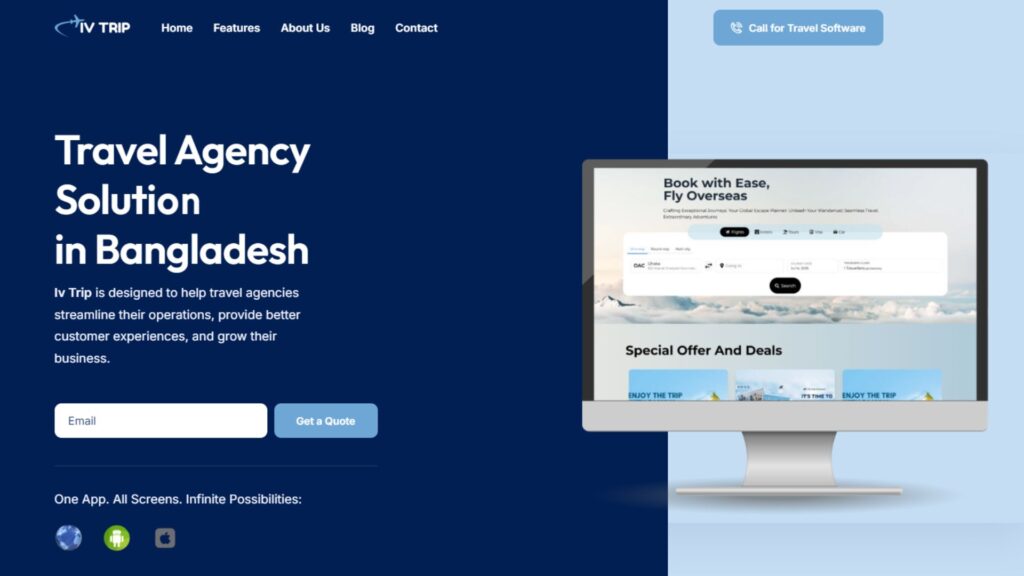
This is where specialized business management software like IV Trip becomes indispensable. Designed specifically for travel agencies, tour operators, and corporate travel desks, IV Trip automates the complex workflows of flight bookings, hotel reservations, and visa processing. By using industry-specific workflow optimization tools, businesses can handle 5x the client volume without increasing headcount.
-
Workflow Automation Tools
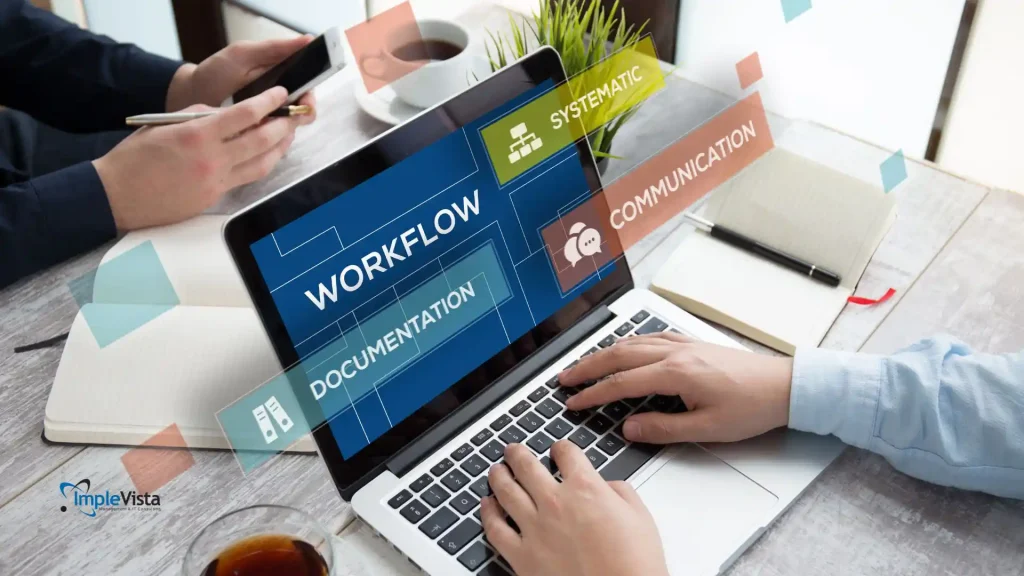
The mantra for 2026 is: If a task is repetitive, automate it. Automation tools serve as the essential “glue” that binds your disparate software applications into a unified digital ecosystem. These tools operate on logic-based triggers, allowing you to build sophisticated “if-this-then-that” scenarios that bridge the gap between your CRM, accounting software, and communication platforms.
For example, a workflow optimization tool can be configured to detect when a sales representative marks a deal as “Closed-Won.” The system can immediately trigger a sequence: it generates a personalized contract using data from the deal record, sends it to the client via an e-signature platform, creates a new project folder in your cloud storage, and notifies the finance team to issue an invoice. This removes the 30-minute to 1-hour delay of manual document preparation, which, when multiplied across hundreds of deals annually, saves thousands of hours of high-value labor.
-
Document Management Systems
Information silos are the enemy of workflow efficiency. A centralized document management system ensures that every team member is working on the latest version of a file, regardless of their physical location.
At Implevista, we often leverage SharePoint application development to build custom document libraries. These systems include automated metadata tagging and secure access controls, ensuring that your team spends less time “searching” and more time “executing.”
-
Communication Platforms
Email is often where productivity goes to die. In a fast-paced environment, the lag time of traditional email chains creates significant friction. To achieve true workflow efficiency, teams need real-time communication channels that enable rapid decision-making and collaborative problem-solving. Modern messaging platforms allow for organized “threads” and specific “channels,” ensuring that project-specific discussions are never lost in a cluttered inbox.
The real power, however, lies in integration. By connecting your communication platform to your business management software, you create an interactive command center. Imagine receiving an instant alert from Iquidi about a low stock level, or a notification from Iv Hr about an urgent leave approval, directly in your chat window. Managers can take immediate action via integrated buttons, keeping the business’s momentum without switching between 5 different applications.
-
Project Tracking Boards
Visualizing the “flow” of work is a fundamental principle of workflow optimization tools. Using digital Kanban boards allows managers to see the status of every project at a glance.
Whether you are managing a software sprint or a marketing campaign, these tools provide transparency. They help identify “bottlenecks”—stages where work piles up—allowing leadership to redistribute resources effectively. This visual clarity is essential for any business solution aiming to reduce project lead times.
-
CRM Suites
A robust CRM is a vital business solution for any growth-oriented company, but its role has evolved. It should no longer be viewed as just a digital Rolodex for storing phone numbers; it must be a sophisticated engine that tracks the entire customer journey, from the first marketing touchpoint to post-purchase support. Modern CRMs use data to predict future customer needs, helping your team be proactive rather than reactive.
When your CRM is deeply integrated with your broader business management software, your sales force gains a significant competitive advantage. While on a call with a prospect, a salesperson can view real-time inventory levels from your ERP or check a client’s payment history from your accounting module. This instant access to data allows them to make informed offers, authorize discounts, and close deals with a level of precision that manual processes cannot match.

-
Business Intelligence (BI) and Data Analytics
You cannot improve what you do not measure. BI tools take the raw data generated by your automation tools and turn it into actionable insights.
In 2026, leading companies are using predictive analytics to forecast market trends and internal resource needs. This foresight is a key component of high-level workflow optimization, allowing businesses to prepare for surges in demand before they happen.
-
Marketing Automation
Finally, your growth engine must be just as efficient as your internal operations. Digital marketing automation tools handle high-volume, repetitive tasks such as lead nurturing, multi-channel email sequencing, and technical SEO auditing. These tools ensure that your brand remains active and responsive 24/7, even when your marketing team is offline.
For businesses operating in highly competitive global markets, partnering with a specialized digital agency to implement these tools is a strategic move. Automation ensures that every lead who downloads a whitepaper receives a personalized follow-up, and every social media post is scheduled for peak engagement times. This level of efficiency ensures that your marketing spend is maximized and your sales pipeline remains consistently full without requiring manual intervention for every single customer interaction.
The Strategic Path to Implementation
Choosing the right tools is only half the battle. To truly achieve workflow efficiency, you must implement them with a clear strategy.
Step 1: The Workflow Audit
Before purchasing new business management software, map out your existing processes. Identify the “friction points.” Is it the three days it takes for an invoice to get signed? Is it the manual entry of employee attendance? Start where the pain is greatest.
Step 2: Prioritize Integration
Avoid “App Fatigue.” Choose tools that talk to each other. For example, your HR management tools like Iv Hr should ideally sync with your accounting modules in Iquidi. This “ecosystem approach” is what separates efficient companies from busy ones.
Step 3: User Adoption and Training
A tool is only as good as the person using it. At Implevista, we prioritize user-centric design in all our developments to ensure high adoption rates. Invest in training to ensure your team understands the full power of the automation tools at their disposal.

Frequently Asked Questions: Workflow Efficiency
- What is the primary goal of workflow efficiency?
The goal is to maximize output while minimizing input (time, money, and effort) by removing unnecessary steps in a process.
- How does Iquidi function as a total business solution?
Iquidi is an ERP platform that unifies finance, sales, and supply chain management into one interface, ensuring data consistency across the organization.
- Why should I use specialized software like IV Trip instead of a general CRM?
IV Trip includes pre-built integrations with global travel APIs (such as flight and hotel engines), which would take months to build from scratch in a standard CRM.
- What are the benefits of Iv Hr for growing companies?
Iv Hr automates the scaling process. As you grow from 50 to 500 employees, the software automatically handles the increased complexity of payroll and compliance.
- How do automation tools reduce human error?
By eliminating manual data transfer between systems, automation tools ensure that data remains accurate and consistent, reducing the risk of costly typos.
- Can workflow optimization tools improve employee satisfaction?
Yes. By removing “drudge work,” employees can focus on high-value, creative tasks, which leads to higher engagement and lower turnover.
- Is cloud-based business management software secure for sensitive data?
Modern platforms like those developed by Implevista use enterprise-grade encryption and comply with global data protection standards, often making them more secure than local servers.
- How long does it take to see an ROI on workflow tools?
Most organizations report significant time savings and reduced operational costs within the first 3 to 6 months of a successful implementation.
- Do these tools work for remote and hybrid teams?
Absolutely. In fact, tools like Iquidi and Iv Hr are essential for remote teams, as they provide a centralized digital office accessible from anywhere.
- What is the first step to starting my automation journey?
The best first step is a consultation. Contact a senior strategist at Implevista to perform a gap analysis of your current operations.
Conclusion: Future-Proof Your Business with Implevista
The journey toward total workflow efficiency is an ongoing process of refinement. By leveraging powerful business solutions like Iquidi, specialized business management software like IV Trip, and comprehensive HR management tools like Iv Hr, your organization can build a foundation for sustainable, scalable growth.
Don’t let manual processes and outdated systems hold your business back. Embrace the power of automation tools and transform your operations today.
Ready to take the next step?
- Consult with Experts: Contact Implevista to discuss your custom software needs.
- Explore Our Solutions: View our full range of Enterprise and HR tools.
- Stay Informed: Read our latest insights on SEO and Digital Marketing.