
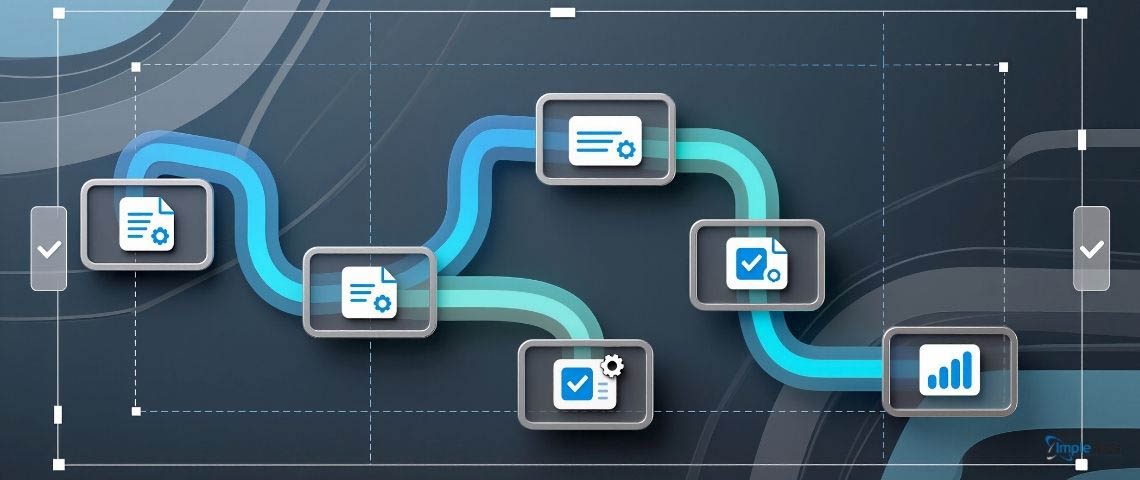
The web development landscape is evolving faster than ever. New technologies like AI-driven tools, headless architectures, and accessible development platforms are transforming how we build websites and apps. In 2026, businesses must adopt these Trends in Web Development to stay competitive. From AI and machine learning to Jamstack architecture, frontend frameworks, low-code/no-code platforms, and beyond, we’ll explore the key innovations shaping the future of web development.
Developers and organizations worldwide are already pivoting toward these trends. For instance, Progressive Web Apps (PWAs) are bridging the gap between mobile apps and websites by using browser features like service workers and manifests for offline support. Similarly, implementing Core Web Vitals (fast loading, smooth interactivity, stable layouts) is now a Google-recommended best practice for any site. These shifts illustrate that performance, accessibility, and user experience are just as crucial as new features.
Looking ahead to 2026, we anticipate even more dramatic changes. Technologies like AI-powered development assistants, emerging frontend frameworks (Astro, Svelte, Qwik), Jamstack and headless CMS architectures, and cloud-native/edge computing will lead innovation. Enterprises are already eyeing Jamstack as a “leading method” for faster, more secure, and highly scalable sites.
Likewise, by 2025–26, Gartner predicts that over 70% of new applications will be built on low-code/no-code platforms, empowering even non-developers to deliver custom digital solutions. In this article, we dive deep into the Web Development Trends | 2026, examining each trend, its benefits, and how businesses can leverage it today.
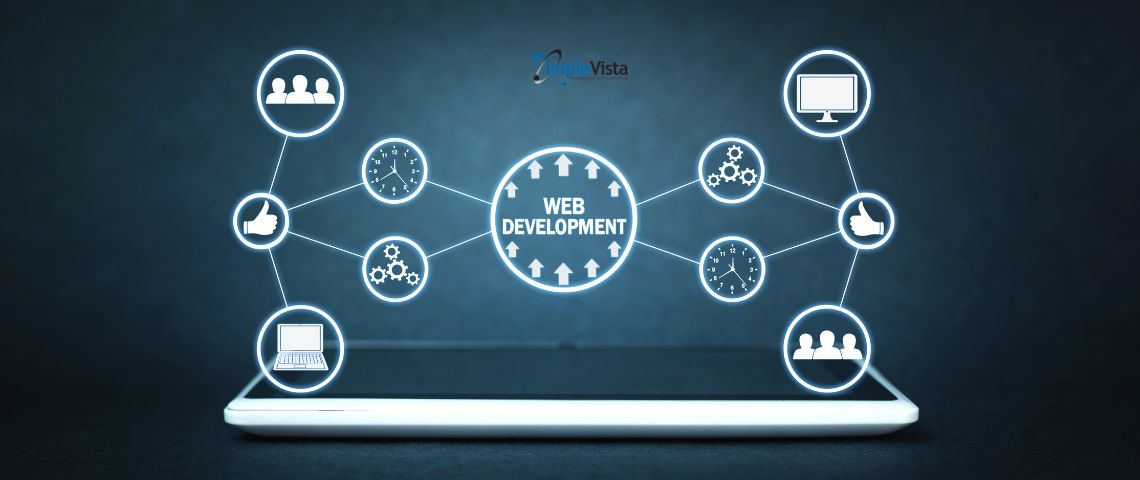
Top Web Development Trends for 2026
The following trends are set to dominate web development in 2026. We’ll discuss each one in detail in the sections below:
- AI and Machine Learning – AI-driven development tools and smarter websites.
- Frontend Frameworks – Modern libraries (React, Vue, Angular, Astro, etc.) and evolving patterns.
- Jamstack & Headless CMS – Decoupled architecture for fast, secure static sites.
- Low-Code/No-Code Platforms – Visual development tools reducing manual coding.
- Progressive Web Apps (PWAs) – App-like web experiences with offline support.
- WebAssembly & Emerging Languages – High-performance code and new languages (Rust, Go).
- Performance & Core Web Vitals – Speed, responsiveness, and stability as business priorities.
- DevOps, Serverless & Edge Computing – Automation, security, and real-time delivery at the edge.
- Accessibility & Sustainability – Inclusive design and green coding practices.
Web developers will need to blend these innovations to build future-proof sites. For example, Implevista’s [Web Design & Development] services emphasize responsive, SEO-friendly development that aligns with Core Web Vitals for fast, accessible pages.
Similarly, our Cloud Engineering and Mobility services help companies adopt trends like serverless architectures and PWAs mentioned below. Incorporating such trends not only improves user experience but also boosts organic search rankings and conversion rates. In the sections that follow, we unpack each trend and provide insights on how businesses and developers can prepare for 2026.
Trends in Web Development | 2026: Artificial Intelligence & Machine Learning
AI-assisted development is no longer futuristic – it’s here. In 2026, almost every software team will use AI-powered tools to streamline coding and workflows. For example, tools like GitHub Copilot, OpenAI Codex, and Tabnine can suggest entire code snippets, debug issues, and even translate pseudocode to real code.
Industry surveys show that today 97.5% of software companies integrate AI into their development processes, a number that will only grow. This means developers can offload routine tasks (like writing boilerplate or tests) to AI assistants, boosting productivity significantly.
AI also enhances the end-user experience. Websites and apps can use ML models for real-time personalization, chatbots, and predictive analytics. Advancements like TensorFlow.js and WebAssembly enable running machine learning in the browser, allowing features such as voice recognition and intelligent content recommendations directly on the client side. This trend blurs the line between front-end and back-end: web pages can now be “intelligent” by leveraging client-side AI.
However, businesses must govern AI carefully. As Implevista’s own research notes, teams are shifting “from exploration to accountability” – focusing on ethical AI use, data privacy, and transparency in models. It’s crucial to implement AI responsibly and review outputs for bias or security issues.
Key takeaways: AI/ML will touch every phase of development in 2026. Expect chatbots, advanced code assistants, and intelligent analytics to become standard on modern websites. Companies should invest in AI-driven DevOps and QA tools (for automated testing, anomaly detection, etc.) to cut development cycles and catch errors early. Training teams on ethical AI and integrating AI into CI/CD pipelines will be essential.
See our blog on AI in Software Development for more on AI trends.
Trends in Web Development | 2026: Frontend Frameworks and Libraries
Frontend frameworks continue to evolve rapidly. Established tools like React, Angular, and Vue remain popular for building complex web apps, as evidenced by the StackOverflow 2024 Developer Survey (JavaScript, HTML/CSS, Python are top languages).
React in particular dominates the landscape (nearly 70% of frontend developers use it), thanks to its rich ecosystem (Next.js for SSR/SSG, React Server Components in v18+, etc.). Similarly, frameworks like Vue/Nuxt and Angular are widely used, especially for enterprise apps.
But emerging frameworks are gaining traction. Reports show that Astro, SvelteKit, Qwik, and SolidJS are growing in interest, as developers seek better performance and simplicity. Astro (a static-site generator) popularizes the “islands architecture” for fast static sites, while Svelte compiles away much of the framework overhead.
These tools support key 2026 goals: faster load times and smaller bundle sizes. Next-generation frameworks often focus on developer experience as well; for instance, many include built-in TypeScript support and zero-config setups, making them more productive.
In short, businesses should continue to rely on proven frameworks for large-scale projects, but also experiment with new tools. Implevista’s development teams, for example, integrate frameworks like React and Angular for responsive, SEO-friendly UIs. At the same time, we’re exploring lightweight options (Astro, Svelte) for landing pages and content-heavy sites to maximize performance.
The trend is clear: framework choice will balance developer familiarity with user speed. Companies should monitor community trends: if a significant shift (like Astro adoption) occurs, it may pay off to learn and adopt these cutting-edge tools.
Trends in Web Development | 2026: Jamstack and Headless Architecture
Jamstack (JavaScript, APIs, Markup) architecture is a top web development trend. By 2026, enterprises are expected to widely adopt Jamstack for its performance and security benefits. In Jamstack, the front-end (typically built with static site generators or headless frontend frameworks) is decoupled from the backend.
Pages are pre-rendered and served from CDNs, drastically reducing server load and improving load times. This makes sites extremely fast and scales easily: content-heavy sites, marketing pages, and e-commerce platforms can handle traffic spikes without elaborate backend infrastructure.
As one analysis explains, Jamstack “produces quicker, more secure, and highly scalable websites” by separating layers and leveraging CDNs. Moreover, with headless CMS solutions (Contentful, Strapi, etc.), content editors can manage content independently of the codebase, enabling seamless omnichannel publishing. For developers, Jamstack also simplifies deployment workflows and improves site security (no direct server to hack).
We anticipate Jamstack sites will become a standard for content-focused projects. For example, marketing sites or documentation sites for 2026 will likely use frameworks like Next.js or Gatsby to generate static pages. Implevista’s own Cloud Engineering services can help businesses migrate to such architectures.
Key advice: start by using a headless CMS with static site builds, and optimize for CDNs and caching. Over time, businesses can leverage microservices or edge functions to reintroduce dynamic features where needed, while still benefiting from a Jamstack core.
Trends in Web Development | 2026: Low-Code and No-Code Platforms
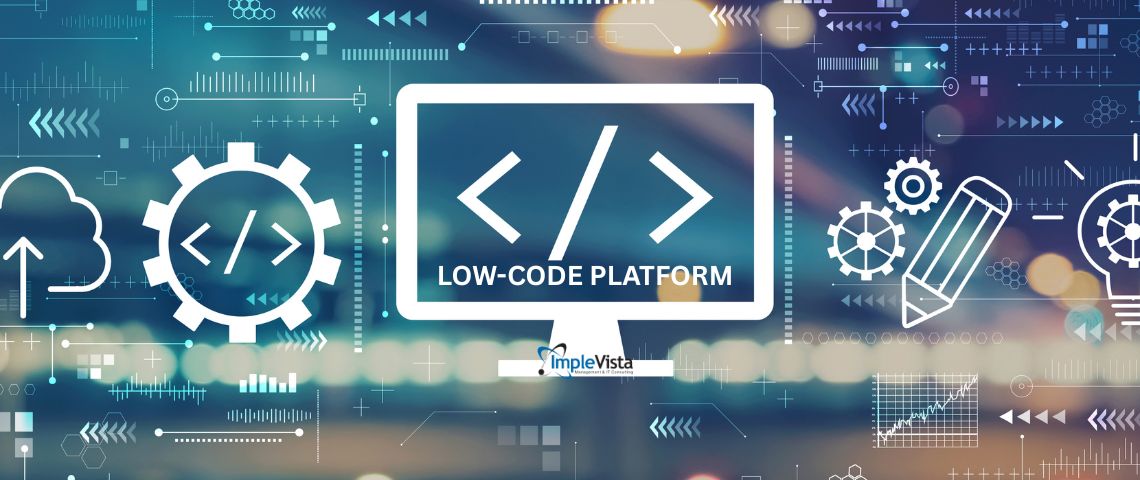
The low-code/no-code movement is revolutionizing how web apps are built. Gartner famously predicts that by 2025, over 70% of new applications will use low-code/no-code tools. These platforms let non-developers (or developers) assemble web and mobile apps using visual builders, pre-built modules, and drag-and-drop interfaces. The result is dramatically faster development: companies report 50–70% shorter project timelines compared to hand-coding.
For example, tools like Webflow, Bubble, and Microsoft Power Apps enable rapid prototyping and deployment. As one Implevista blog notes, these platforms are “mobile-first” by design – they automatically generate cross-platform apps. This is a boon for businesses with limited development teams or urgent digital transformation needs. Low-code is especially impactful in domains like e-commerce or internal tools: a merchant can spin up a basic web shop or an employee can build a workflow app without writing a line of code.
However, low-code has trade-offs. Customization and scalability can be limited, and there may be vendor lock-in. The best approach is often a hybrid: use low-code for speed (e.g., landing pages, MVPs, internal dashboards) and traditional development for core systems. Companies should also train developers to extend or integrate these platforms, ensuring proper security and data practices.
Key benefits: Faster time-to-market, lower cost for prototypes, and empowerment of citizen developers. As Gartner says, this trend reflects “the race for digital solutions”. Implevista’s Development Team services can assist clients in choosing the right balance between low-code platforms and custom development. In 2026, having some familiarity with low-code tools (even if just to know their capabilities) will be a competitive advantage.
Trends in Web Development | 2026: Progressive Web Apps (PWAs) & Mobile-First Design
Progressive Web Apps continue to blur the line between websites and native apps. A PWA is essentially a website enhanced with modern web APIs (service workers, web app manifest) to provide offline usage, push notifications, and a more app-like feel. By 2026, we expect many organizations to adopt PWAs as the standard for customer-facing sites. The advantages are clear: a single PWA serves all platforms (desktop and mobile), with the look and feel of an app.
Recent market reports project a massive growth in PWA adoption; one study notes the PWA market could reach nearly $10 billion by 2034. This reflects how PWAs are especially valuable for regions with inconsistent connectivity – for example, Bangladesh and other markets where Implevista works. We advise clients to consider PWAs for e-commerce stores, media sites, and other apps where offline availability boosts user engagement (e.g., articles, catalogs).
A mobile-first mindset is also crucial. Designers should use responsive or adaptive layouts and prioritize fast load times on mobile networks. This ties into the Core Web Vitals strategy: optimizing Largest Contentful Paint, Interaction delay, and visual stability is even more important on mobile devices Implevista’s web design practice emphasizes fluid, mobile-optimized layouts. In short, treating every web project as mobile-first and considering PWA features (like a home-screen install icon) will be a key 2026 trend.

Trends in Web Development | 2026: WebAssembly and Emerging Languages
For compute-heavy web features, WebAssembly (WASM) is a game changer. WebAssembly allows code written in languages like Rust, C++, or Go to run in the browser at near-native speed. This is already enabling high-performance web apps – for example, browsers can now do real-time 3D rendering, complex visualizations, or AI inference without plugins. In 2026, we expect WebAssembly to empower new classes of web applications (complex games, engineering tools, scientific apps) that were previously native-only.
Alongside WASM, we’re seeing new server-side languages gain popularity. According to reports, TypeScript continues to rise in use for web dev, and Rust is admired for its performance and safety. Go is also popular for cloud microservices (due to concurrency and speed). Teams should consider these modern languages when building backend APIs or WebAssembly modules. For example, writing performance-critical browser functions in Rust (compiled to WASM) can dramatically speed up tasks like image processing.
Key action: Evaluate where traditional JavaScript may be a bottleneck. Consider using WASM modules or server-side languages like Go or Rust for heavy tasks. We recommend developers follow projects like wasm-bindgen or the ongoing evolution of WebAssembly to stay current. Implevista’s engineers are exploring Rust and WASM for next-gen projects, and we recommend startups and enterprises do the same for future-proofing.
Trends in Web Development | 2026: Performance, Security & Core Web Vitals
Performance remains king. Google explicitly recommends achieving “good Core Web Vitals” (fast load, responsive interactivity, stable layout) for SEO and user satisfaction. In practice, this means optimizing images, minifying code, using CDNs, and ensuring mobile speed. In 2026, with ever-rising user expectations, even small lags can drive visitors away. Businesses should treat performance optimization as a core part of development, not an afterthought.
Security is also a critical trend. Modern architectures (Jamstack, serverless) inherently improve security by reducing server attack surfaces. But new concerns arise too: supply chain attacks on npm packages, and vulnerabilities in ML models. Web developers must adopt practices like Content Security Policy, regular dependency audits, and HTTPS everywhere. Privacy regulations (GDPR, CCPA, etc.) will also shape how we handle user data on websites.
Accessibility and inclusivity will grow in importance as well. Government and industry standards (WCAG) are pushing web dev toward accessible design by default. In 2026, creating sites that work for users with disabilities – screen-reader support, keyboard navigation, alt text on images – will be considered best practice.
Similarly, sustainability (green hosting, efficient code) is an emerging concern: fast sites not only serve users better but also consume less energy. We recommend integrating accessibility audits and environmental impact checks into your development workflow.
Trends in Web Development | 2026: DevOps, Serverless, and Cloud-Native
Behind the scenes, web development is accelerating through DevOps and cloud technologies. Serverless computing (AWS Lambda, Azure Functions, etc.) and edge computing are enabling developers to run code without managing servers, responding quickly to traffic and reducing latency.
This trend means websites and APIs can handle unpredictable load (e.g., viral marketing campaigns) seamlessly. In fact, edge-based functions (via CDNs) allow dynamic features to run globally closer to users. We advise developers to design new projects with cloud-native in mind: containerization, CI/CD pipelines, and auto-scaling will be table stakes.
Microservices architectures will also continue to influence web dev. Large web platforms will break into modular services (e.g., an API gateway, separate auth service, micro-frontend components). This improves team agility and fault isolation.
Implevista’s Cloud Engineering team works with clients on multi-cloud and microservices strategies to modernize legacy apps. In 2026, web apps should be built for continuous deployment and cloud resilience: automated testing, container orchestration, and monitoring (DevOps) become integral to the development process.
Trends in Web Development | 2026: Accessibility, UX, and Emerging Interfaces
Finally, keep an eye on how people interact with the web. Beyond traditional GUIs, voice interfaces and AR/VR (WebXR) experiences are gaining interest. For example, websites might incorporate voice shopping assistants or 3D product previews. While not mainstream yet, metaverse concepts are influencing web standards and CMS. Ensuring your sites are ready for new input methods (touch, voice, wearables) is a smart long-term strategy.
Key Trends Summary: In summary, 2026 web development will be about speed, intelligence, and integration. AI and machine learning will power smarter sites and tools, Jamstack and headless architectures will deliver content lightning-fast, and low-code/no-code will democratize app creation.
Popular frontend frameworks will evolve with server-side rendering and islands architecture, while new languages and WebAssembly will push performance frontiers. Underpinning it all are robust DevOps practices and a relentless focus on performance (Core Web Vitals), security, and accessibility. Organizations in Bangladesh and globally should embrace these trends to deliver state-of-the-art user experiences and maintain a competitive edge.

Frequently Asked Questions (FAQs)
What are the top web development trends for 2026?
Key trends include AI-powered development tools, Jamstack architecture for fast static sites, low-code/no-code platforms for rapid app building, Progressive Web Apps (PWAs) for offline access, and evolving frontend frameworks like Astro and SvelteKit.
How will AI and machine learning affect web development?
AI is becoming integral in every phase: intelligent code assistants (Copilot, etc.) boost developer productivity, while ML models run in the browser for personalization and voice recognition. Web development teams will use AI for code generation, testing automation, and real-time analytics, making websites smarter and more efficient.
What is Jamstack and why is it important?
Jamstack is a modern web architecture (JavaScript, APIs, Markup) that decouples front-end from back-end. It pre-renders pages and serves them via CDNs, resulting in faster load times, better security, and scalability. By 2026, Jamstack is expected to be a leading approach for building websites, especially for content-heavy and marketing sites.
Will low-code/no-code replace traditional web development?
Low-code/no-code platforms enable rapid app creation without hand-coding, which is why Gartner predicts ~70% of new apps will use these tools by 2025. While they speed up development, they won’t fully replace custom coding. Instead, organizations will use low-code for simple apps and prototypes, and traditional development for complex, highly-customized solutions.
Which frontend frameworks will dominate in 2026?
React (with Next.js) will still be widely used, along with Angular and Vue. However, interest is growing in newer frameworks like Astro, SvelteKit, Qwik, and SolidJS. Developers should choose frameworks based on project needs: React/Vue for large dynamic apps, and lightweight frameworks for static or performance-critical sites.
Are Progressive Web Apps (PWAs) still relevant?
Yes, PWAs are very relevant. They provide native app-like features (installable, offline, push notifications) via web technologies. Many companies adopt PWAs to reach users on mobile and desktop without separate native apps. In 2026, expect PWAs to be common for e-commerce, news sites, and any service where offline capability boosts engagement.
How important are web performance and Core Web Vitals?
Extremely important. Google’s Core Web Vitals (loading speed, interactivity, visual stability) are critical for SEO and user experience. In 2026, optimizing these metrics (e.g., LCP <2.5s, INP <200ms, CLS <0.1) will be as essential as good content. Fast, responsive websites will rank better and keep users engaged.
What is WebAssembly and why should I care?
WebAssembly (WASM) lets you run high-performance code (from Rust, C++, etc.) in the browser at near-native speed. It’s ideal for compute-intensive tasks (graphics, video, heavy calculations). By 2026, WASM will enable new classes of web apps (3D games, CAD tools, etc.) that were once only possible as native apps. If your app needs speed, consider WebAssembly modules.
How do DevOps and cloud technologies influence web development?
DevOps (CI/CD, automation) and cloud-native architectures (serverless, microservices) are now standard practice. They let teams deploy frequently and handle scaling automatically. In 2026, expect most web projects to use container orchestration (Kubernetes) or serverless functions, with monitoring and automated testing integrated into the pipeline. This ensures reliability and faster updates.
How can my business prepare for these web development trends?
Stay informed and adopt incremental changes: optimize your current site for performance (Core Web Vitals), experiment with Jamstack or PWAs for new projects, and consider low-code tools for quick prototypes. Invest in training your team on AI tools and modern frameworks. Finally, partner with experts (like Implevista) who specialize in these trends. Contact us to learn how we can help future-proof your web presence.
Ready to implement these trends? Contact Implevista today to modernize your website and applications. Our [Web Design & Development] services harness the latest trends to build fast, secure, and user-friendly sites. You can also [subscribe to our blog] for more insights, or [explore our services] to see how we can boost your digital strategy. Let’s build the future of the web together!